

My uneasiness fades with the dawn. On my
summer morning walk, the sun drenches me in its
heat, its bright yellow ambience burning the back
of my neck and the pavement below my feet. When
the sun is up, everything is bright and everyone’s
gardens are blossoming. I feel carefree, knowing
shadows inside shuffle to hide in the tiny crescents
between drawers and shelves.
When I get home from work, the sun is
long gone. My walls are painted yellow; my floral
couch cushions are shades of orange and amber;
my carpets are soft with a lemony tone. My
cabinets are full of china, silverware and pottery
painted cracked plates that had held hundreds of
meals and which I had washed with my bare hands
countless times.
I left a note on the fridge to remind myself
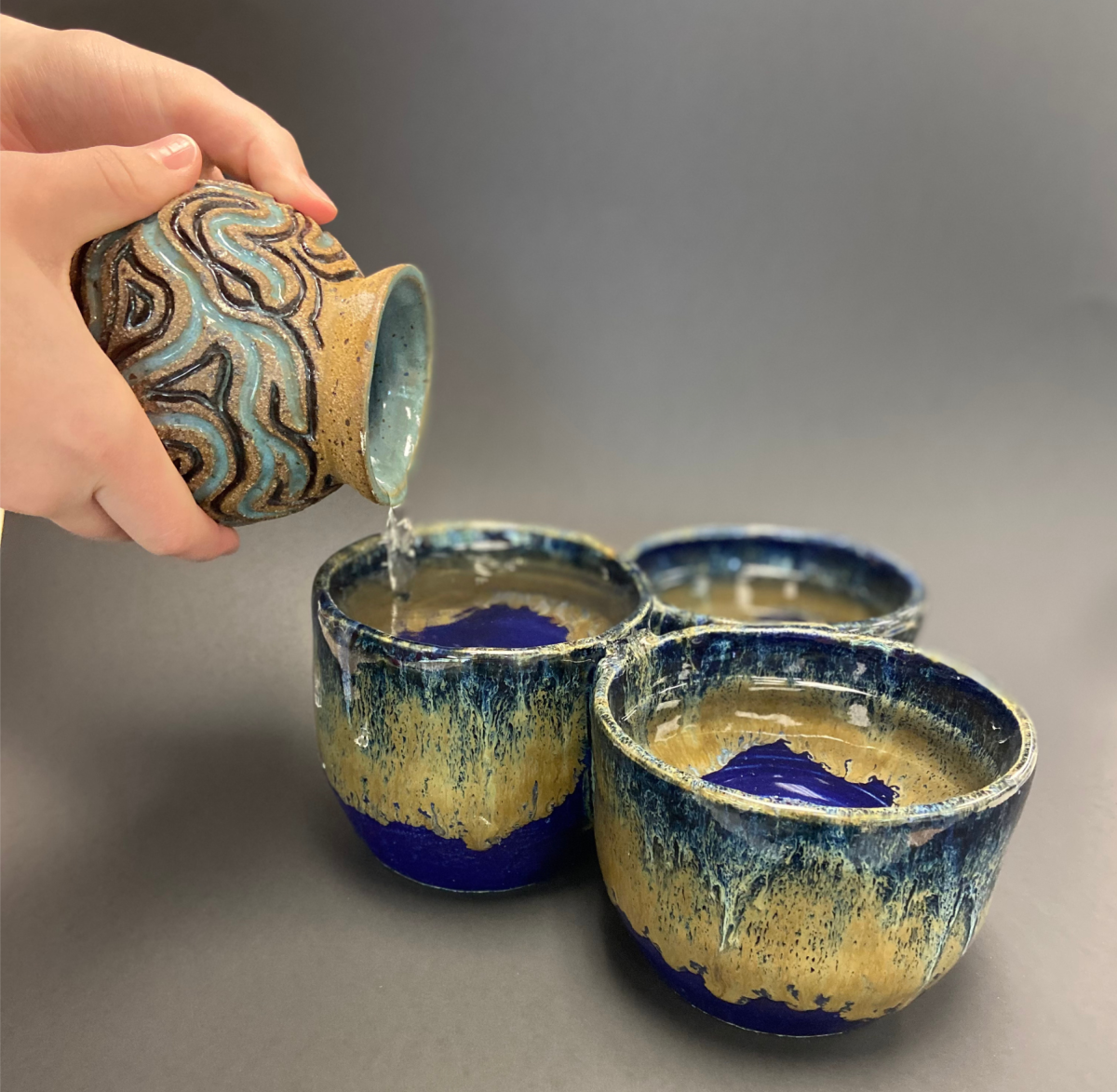
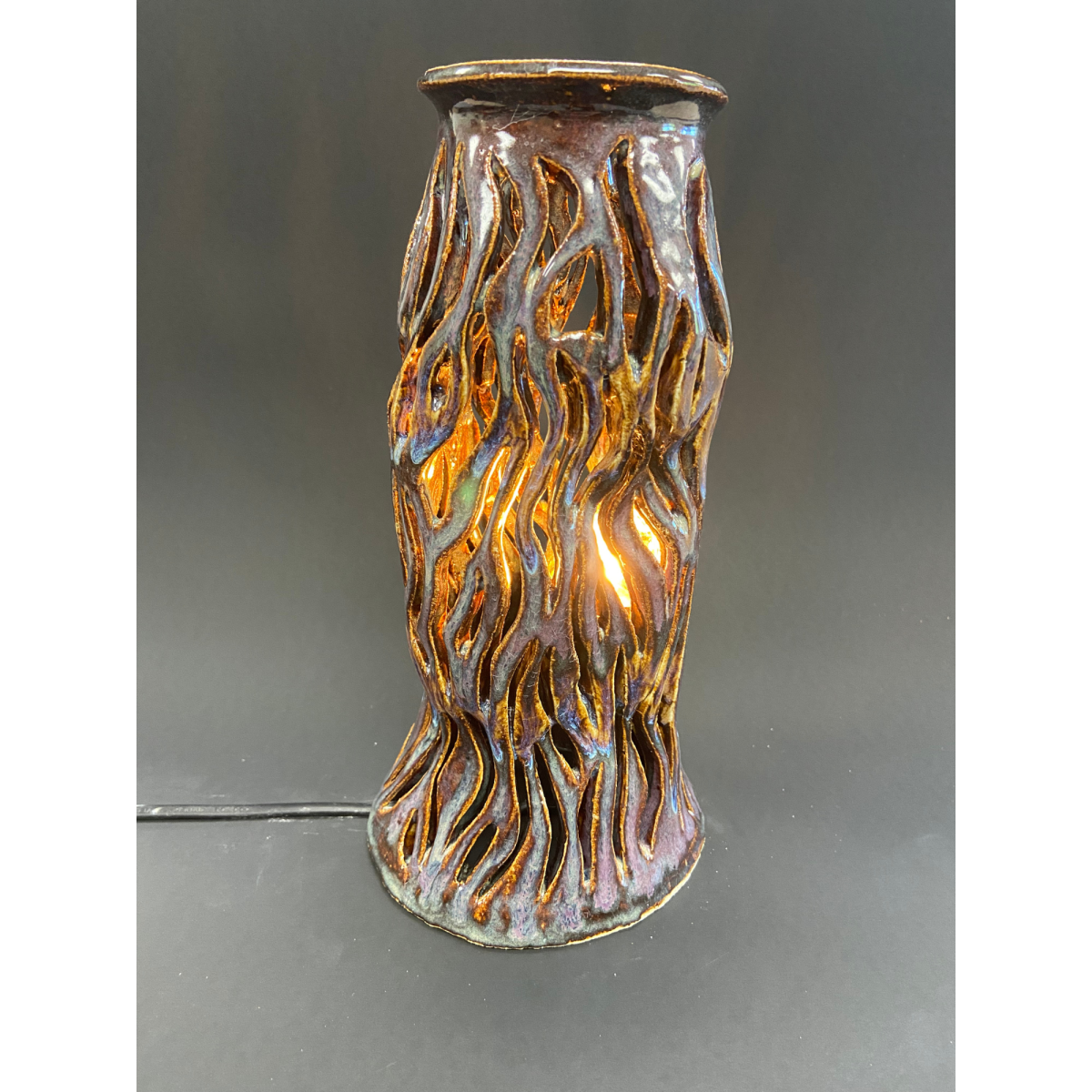
to pick up my pottery. I made sure to place my
new vase along the lines of pots filled with soil and
sunflowers. At the bottom of the vase I
had carefully carved the date when I had
sculpted it and left it to dry. The rest of the day
goes accordingly; I fold the laundry, and mop the
floors until it’s that time of day when the shadows
are the shortest, around the time I pick up Wyatt
from school.
I enjoy treating every day like spring cleaning.
The sun rises again. Just like every other day, I
wake up in the same spot next to the same drawer.
I go on a walk, garden, or enjoy the heat of the sun,
which soaks me in a memory that is too shaded
by fog to remember. Familiarity in routine is my
love language. This loop keeps me steady, so does
the sun; its warmth withdraws me from the cold. I
haven’t felt cold in years.
I have a regular health check; it’s always
the same man in his late twenties. His face has a
sweet plump look to it with rosy cheeks and amber
eyes, thin glasses hanging on the bridge of his nose.
His name tag is too blurry to comprehend, pinned
to his off-white coat.
I’ve learned a lot about myself from these
visits. For one, I love to talk; my thoughts sound
different when I speak them aloud to others. I told
him about my son, how when he was younger he
loved to sleep in the sun, and spend his time in the
gardens doing his homework. We’d spend afternoons
together, time when I did not need the sun’s
warmth, when the walls were not painted yellow.
The health checks became less frequent,
and eventually he stopped showing up. It bothered
me at first. It felt colder, the sun would leave earlier,
past my neck I felt frozen, immobile. My head felt
hot and burned like an incurable migraine, full
of thoughts about how my garden began to wilt.
My sunflower had shriveled, its growth stunted; it
needed the sun to survive. The scent which once
tranquilized my thoughts now smelt dead.
I can’t leave. It’s hard to sleep; my eyes are
dark sockets of charcoal. I feel paler, almost purple.
Thinner. There is nobody left to cook for, but was
there ever? My thoughts don’t sound any different
when said aloud, my throat feels like sandpaper, I
can’t even speak or scream.
My legs ache, leaving me bedridden next to the wall,
right where the yellow paint began to peel. And all I
can do is peel more, which reveals a padded white
layered wall beneath it. I don’t think I’ll ever see the
sun again.
“Mommy, wake up!”
I open my eyes. I’m surrounded by familiar
tall green grass in what was my backyard, and the
sound of bees buzzing around freshly potted flowers.
A small familiar boy comes running towards
me and stops abruptly a couple feet away. He can’t
be older than eight. His knees are bruised and
covered in dirt which nearly matches the color of
his tousled chestnut hair. Amber round eyes hold
childlike innocence, freckles covering his chubby
cheeks. Standing in front of the sun, he casts a
shadow on me.
“Geez, ma! I thought you died!”
I am guided inside the tiny house across
the backyard, the boy’s smaller hand intertwined
with mine. The fireplace is on, the curtains are
open, and there’s a knock at the door.
“Dad’s back from work,” The boy whispers,
then tiptoes to the door, his hand on the knob
before turning back around, “he’ll be angry if he sees
you’re out of bed.”
I take a moment to admire the vases on the
shelf filled with daffodils.
The warmth fades away.
I wake up in the same dark room, the only source of
light coming from the blinds just letting a sliver of sunlight
inside. Peeling paint, a broken lamp on the bedside table,
and a chair next to the bed. I can’t help but wonder if I could
still make a vase, or even prep the clay without tearing a
muscle.
The man in the white coat is back, holding an
orange prescription bottle, he looks at it, then at
me sorrowfully. He sighs,
“This is the last dose you’ll get.” My throat feels
sore, so I don’t even bother to speak.
“Here.” He hands me a glass of water, then a singular
pill. Taking it, I can’t help but notice the man’s desolate look.
He doesn’t just pity me. I can tell he pities himself, his job,
having to deal with me. I swallow the pill.
“The hospital requested we do what’s best for your
health. You’re in pain. In this case there’s nothing we can do
at all.” His hands are shaking.
I take a look at the prescription: no name, no sign
from the doctor; not even a note.
“You don’t even remember what happened to your
family, your son, what you did to your own husband. ” He
takes his glasses off. Amber eyes, the last eyes I’ll see.
“You can’t even remember my name.” His face is full
of an emotion I couldn’t even describe if I could speak. No
more freckles; that child-like innocence is gone. It hurts to
remember it was ever there.
He paused. “But I still love you, Ma. Before you went
mad, you’d talk about how I’d always ‘lay in the sun’ or ‘spend
my time in the gardens’… But you don’t remember that, do
you?”
Then I’m trying to yell, yell that he’s not my son, that
he’s a murderer. But my throat works against me as I begin
wheezing; it could be the prescription. He stands up to leave,
but not before bringing in the vase from my dreams. The
daffodils are all dead, leaves shriveled just like the hand he’s
holding in his palm.
“It was never your fault, but trust me this is for the
best. For both of us.”
He lets go of my hand. The blinds shut, engulfing
me in darkness.
“Goodnight, Ma.”
Weight of Warmth
Donate to MIHS Pegasus Creative Arts Magazine
Your donation will support the student journalists of Mercer Island High School. Your contribution will allow us to purchase equipment and cover our annual website hosting costs.